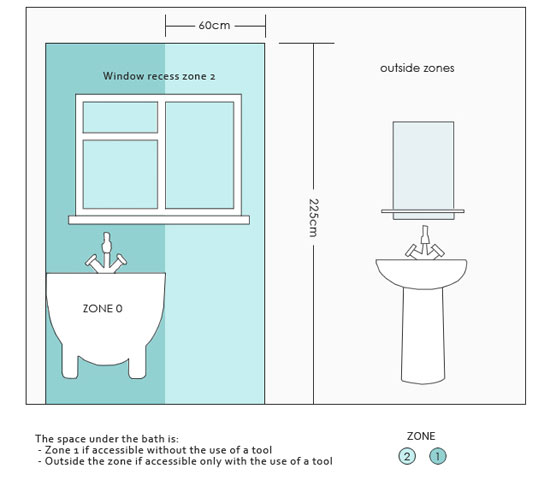
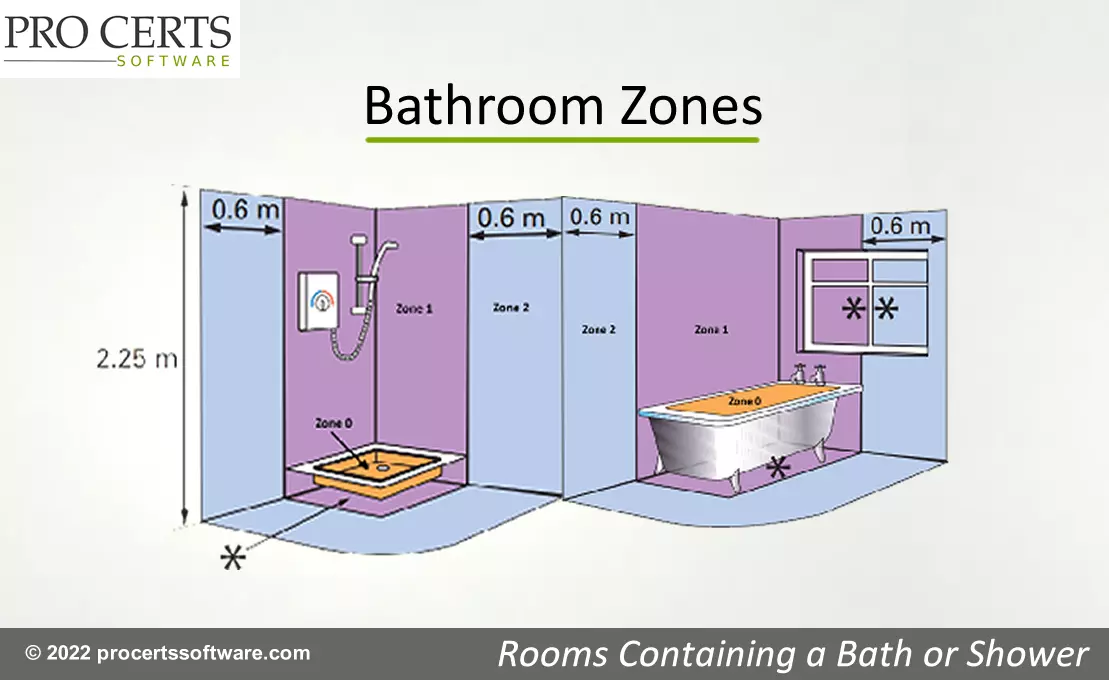
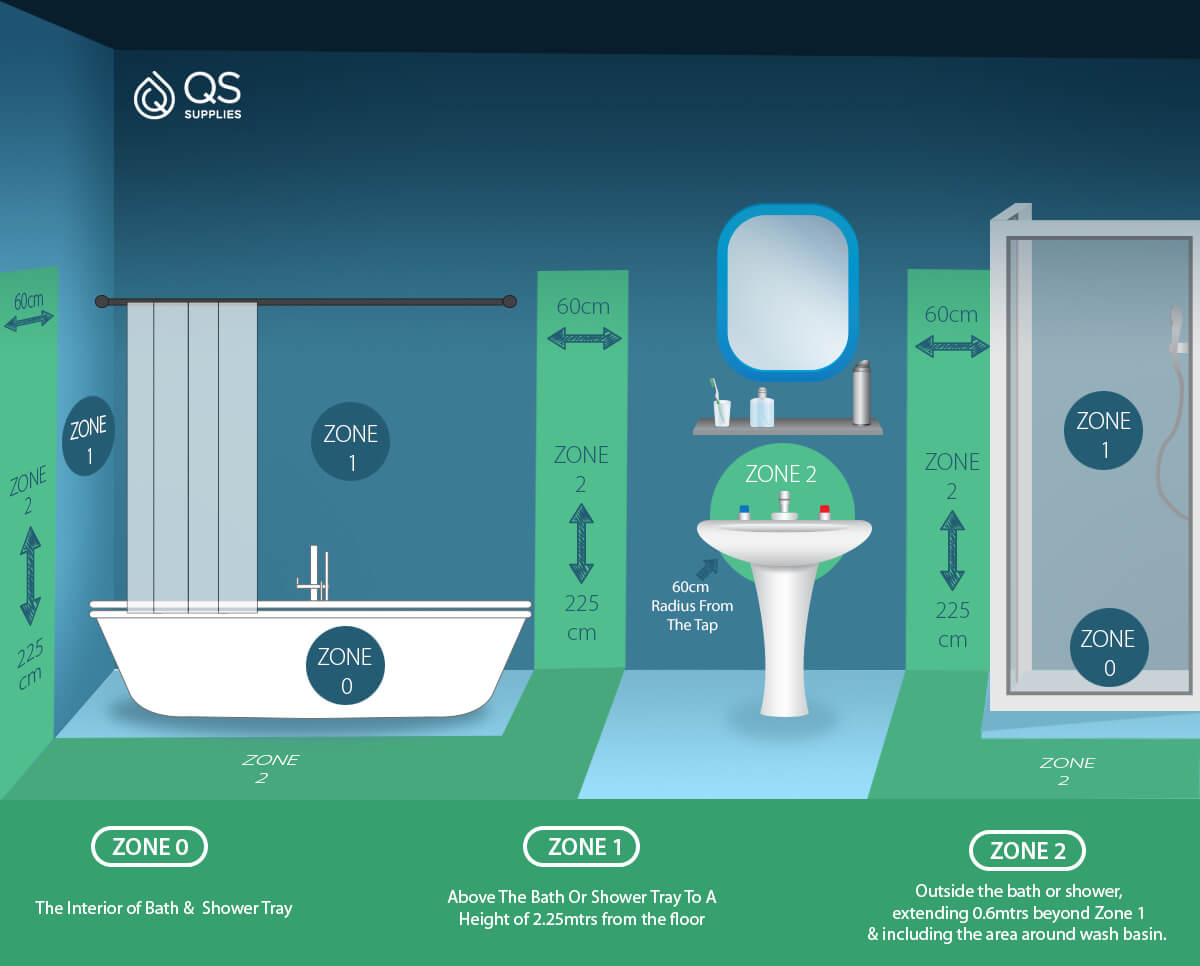
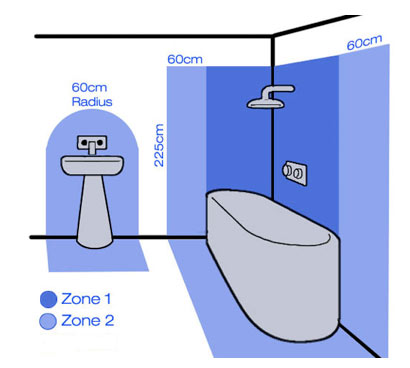
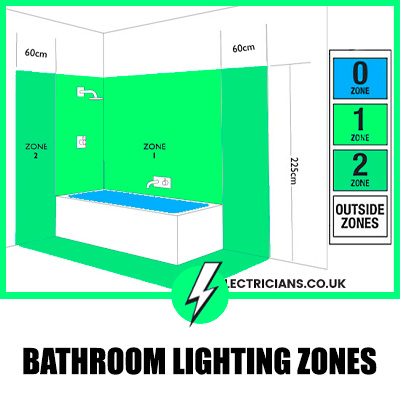
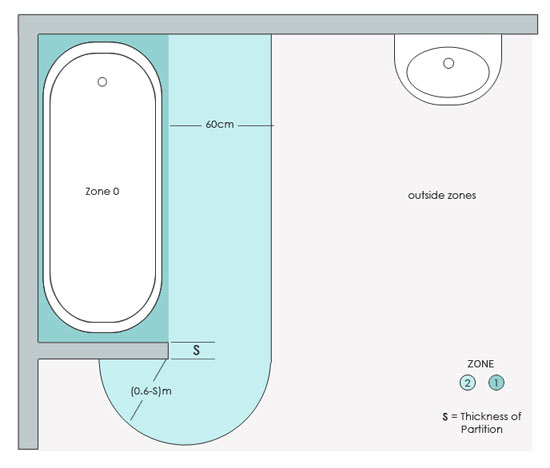
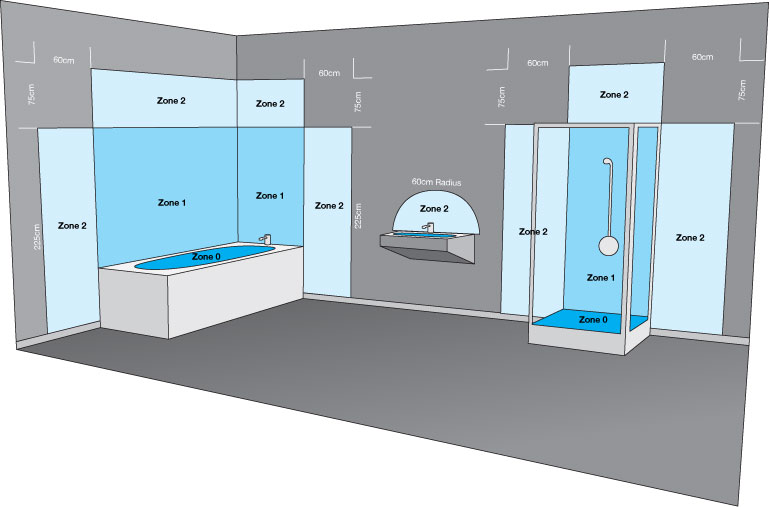
Socket-outlets or plug sockets must not be installed in a bathroom Zone 0, Zone 1 or Zone 2 of a bathroom or shower room under any circumstances. All socket outlets must be RCD protected and installed at a distance of at least 3 meters horizontally away from the edge of the bath or shower tray. Learn how to safely install electrics into bathroom zones, showers, or wet rooms using your bs7627 18th edition guide.

These sockets are designed to be splash-proof, minimizing the risk of electrical shock. Additionally, shaver sockets are commonly used in bathrooms for low-voltage appliances such as electric toothbrushes and razors. Installing a socket in a bathroom requires following regulations, understanding the different zones, and implementing safety.
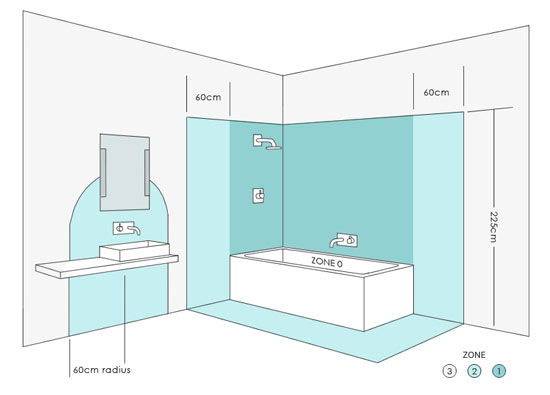
What are Bathroom Electrical Zones? | Big Bathroom Inspiration
230 V socket outlets The 17th Edition introduced another important change: Regulation 701.512.3 permits 230 V socket outlets to be installed in a room containing a bath or shower, providing they are installed 3m horizontally from the boundary of zone 1. This is the specification for industrial and domestic safety isolating transformers). Low voltage shaver sockets should only be used in a bathroom.

In accordance with the updated 17 th edition of the IEE Wiring Regulations, it is safe to install electric shaver sockets in your bathroom providing the socket is 110v and installed in zone 2 or beyond. Can you install electric shaver sockets in a bathroom? According to the updated 17 th edition of the IEE Wiring Regulations, it is safe to install electric shaver sockets in your bathroom providing the socket is 110v and installed in zone 2 or beyond, with at least a 3. Installing sockets in "wet" rooms can be! But since water is a bad ally of electric current, this should be done according to all the rules: purchase special cables and sockets for the bathroom, choose a place for them according to all the rules.

Bathroom Electrical Regulations (UK) | Everything You Need To Know
In conclusion, while it's generally possible to have wall sockets in your bathroom, it's essential to follow electrical regulations and safety guidelines meticulously. Understanding the designated electrical zones and their restrictions is key to making informed decisions about the placement of power sockets in this vital space. Bathroom Zones Explained Using electrical equipment in bath or shower rooms has always needed care to ensure safety.

Now the IEE Wiring Regulations (17th Edition) have identified particular zones within the bathroom to indicate what type of electrical equipment can be installed. Understand bathroom electrical zones, their safety guidelines, and how they prevent hazards by regulating electrical installations in wet and dry areas.