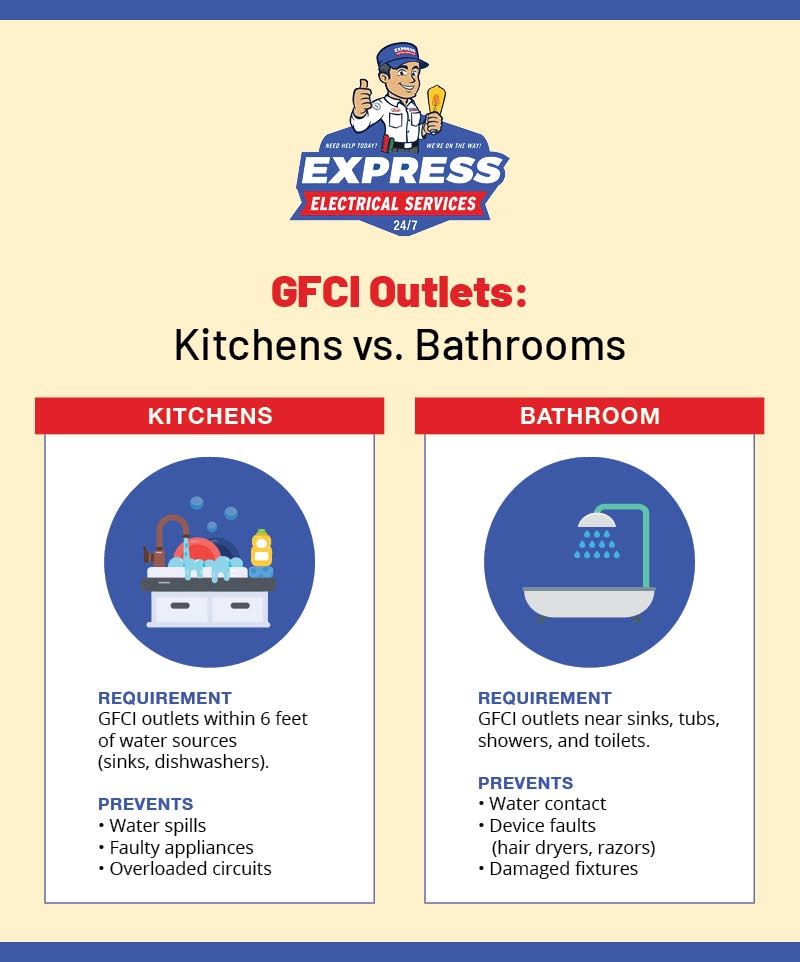
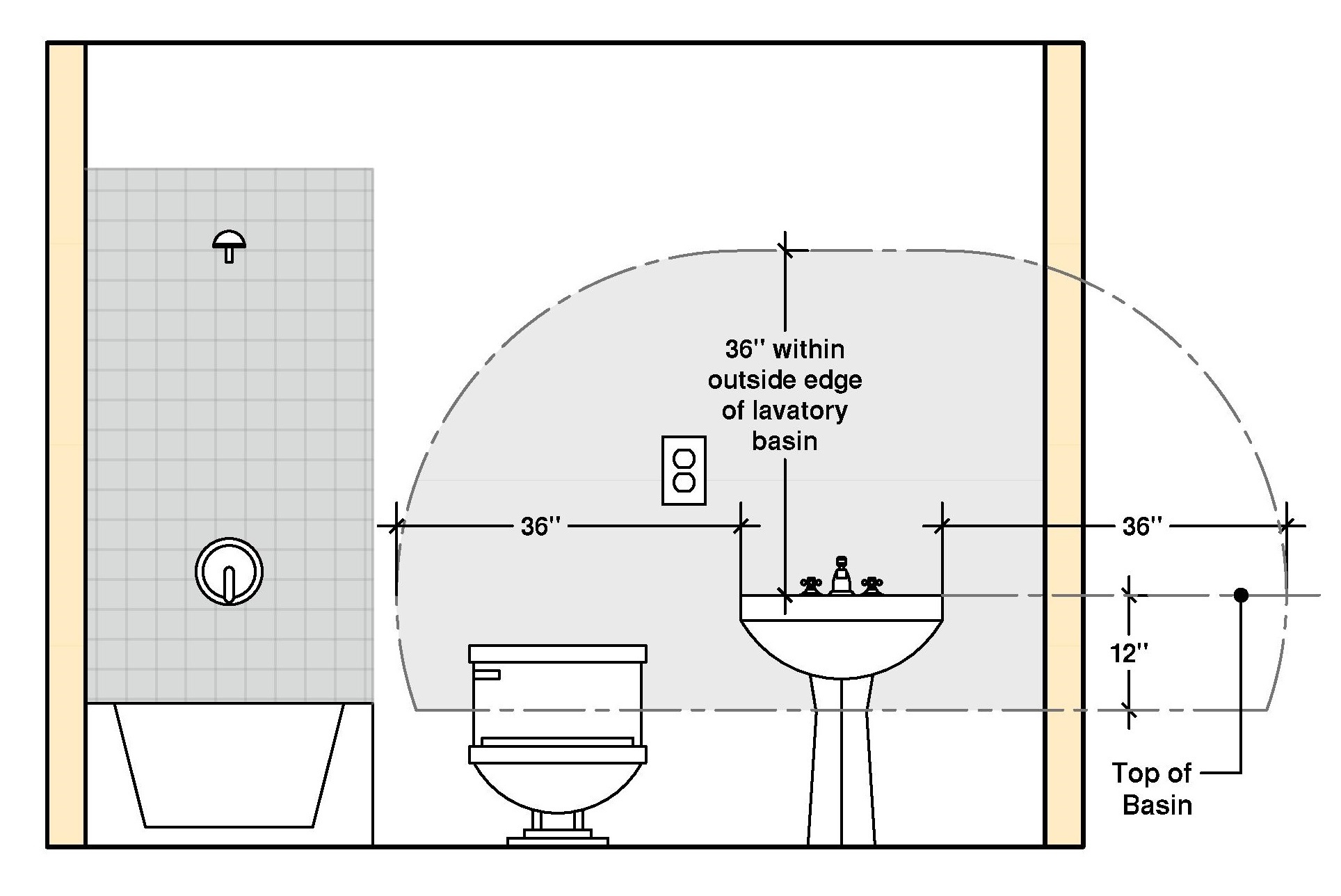
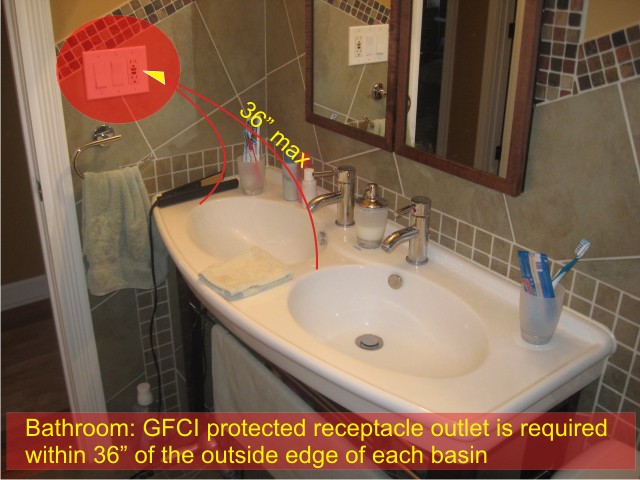
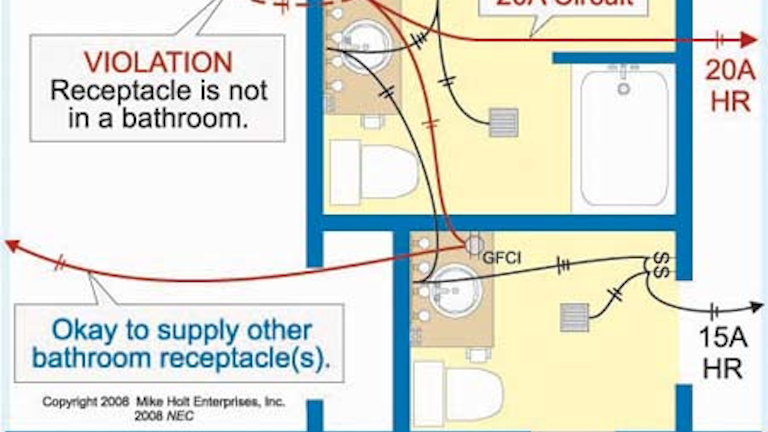
Now that you know GFCI outlets are required in bathrooms, where exactly must they be placed? Where must GFCI Bathroom Outlets be Located? Section E3901 of the CRC requires outlets to be distributed throughout various rooms for general use. In Section E3901.6 specifically, the code talks about the location of the outlet in a bathroom. The minimum requirement for outlet receptacles in a bathroom is one GFCI.
While that one outlet can provide protection to multiple outlets downstream, for maximum safety, all outlets in wet areas should have GFCI protection. Why does my GFCI outlet keep tripping? GFCI bathroom outlets that keep tripping may have moisture buildup, overloaded circuits, or faulty wiring. Try pressing the "Reset" button first.
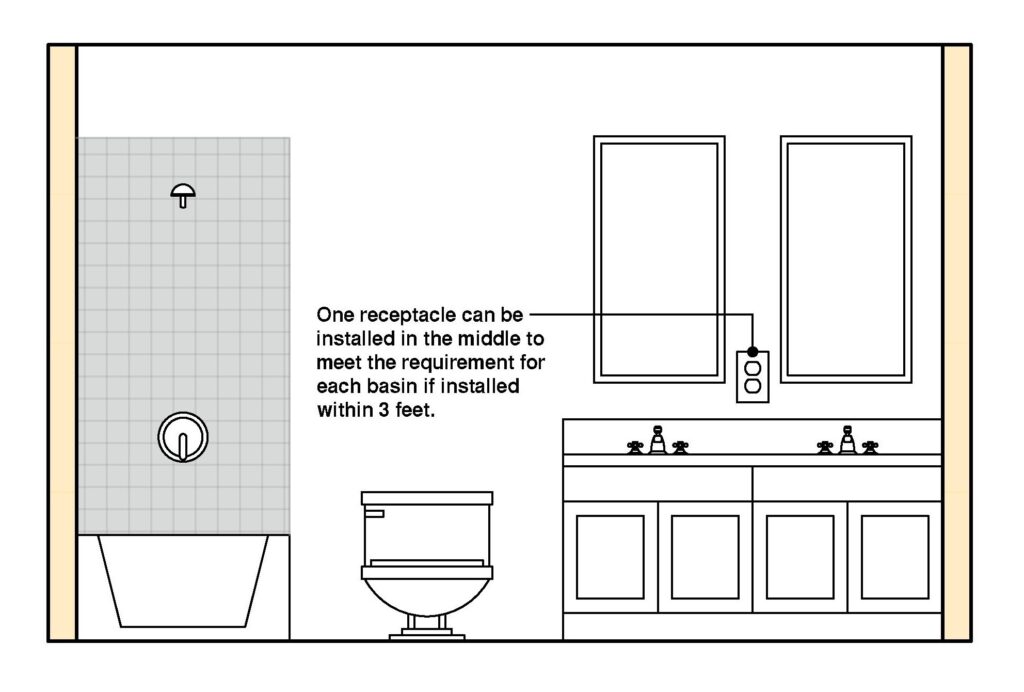
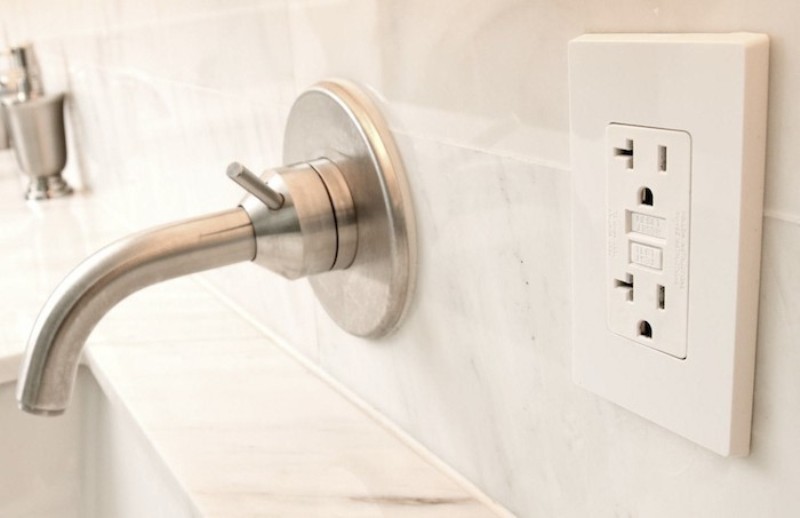
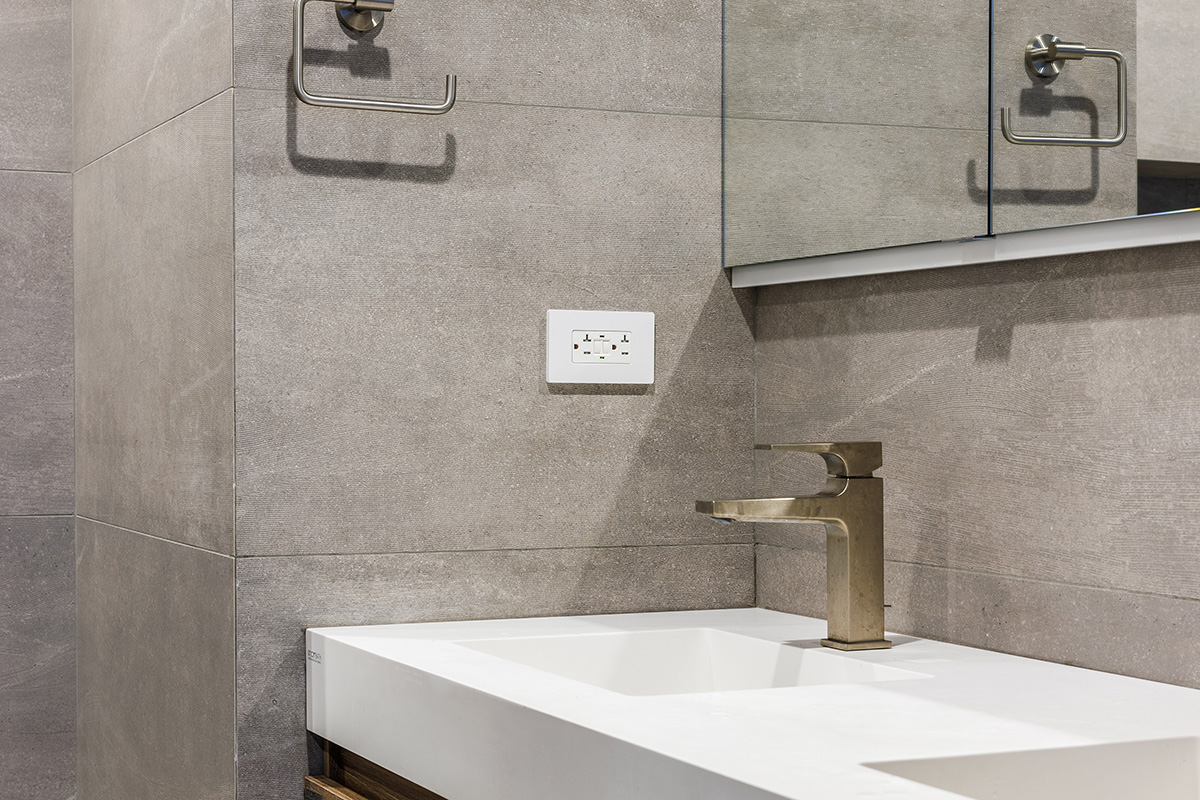
Bathroom GFCI Receptacles and Bathroom Electrical Components
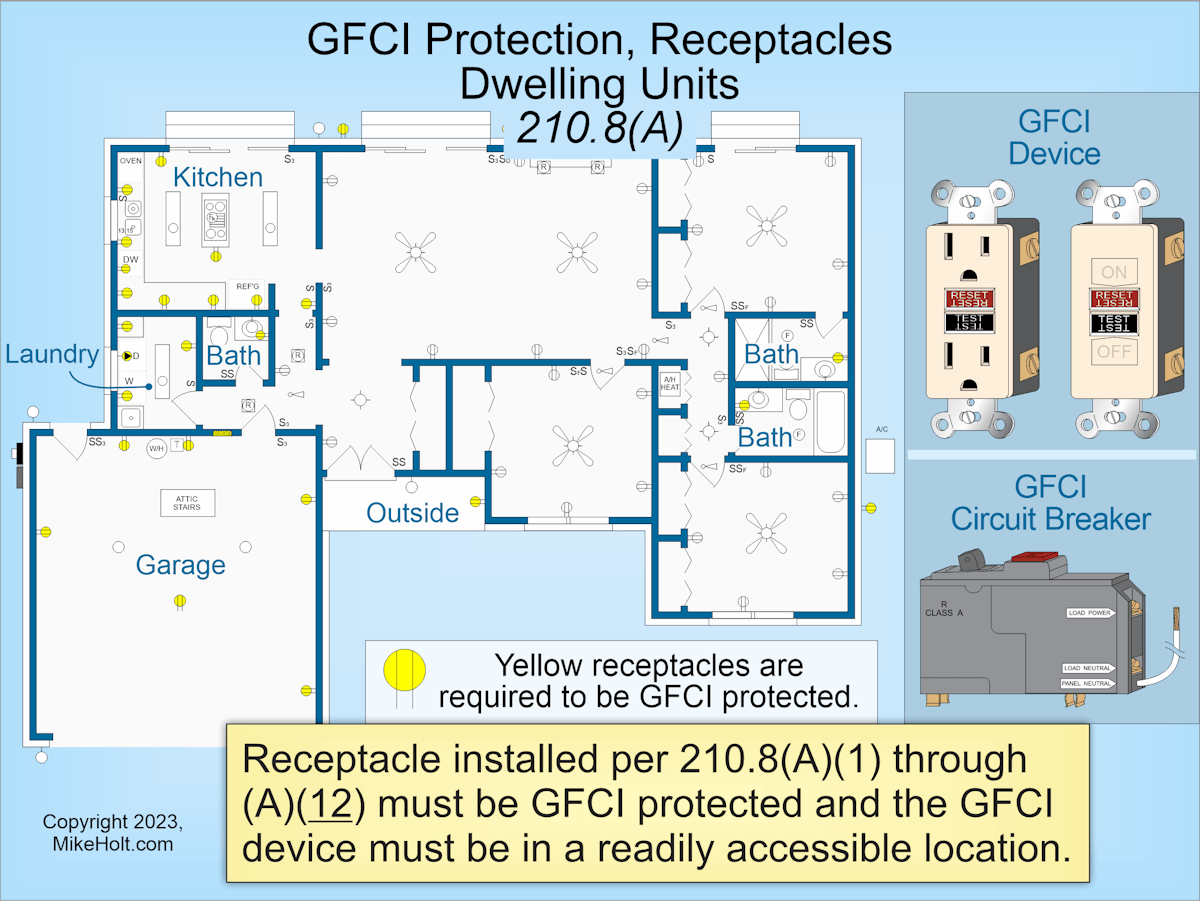
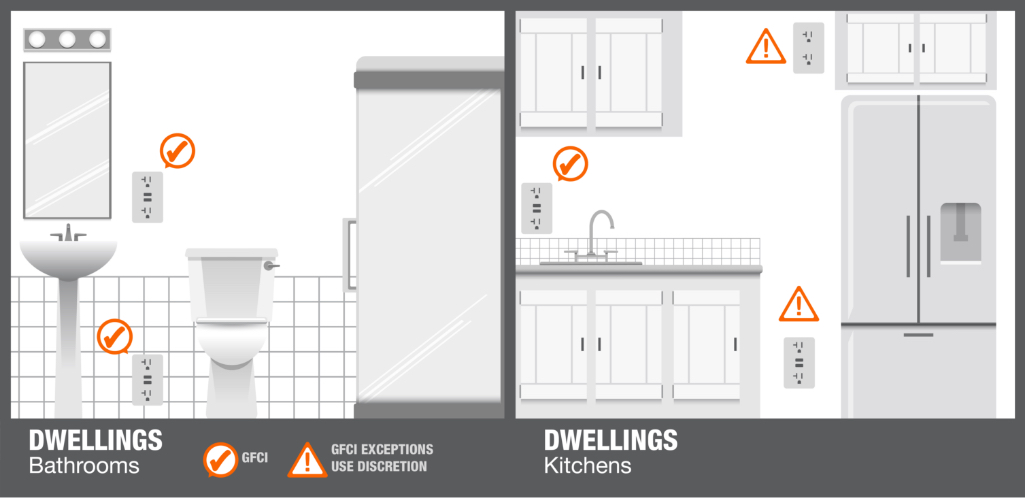
2023 NEC code changes include GFCI outlet requirements and updates to increase safety in kitchens, bathrooms, office break rooms, pool areas and more. Are GFCI Outlets Required by Code? The National Electrical Code (NEC) requires ground fault circuit interrupter (GFCI) protection in wet areas, including bathrooms, kitchens, laundry rooms, garages, crawl spaces, and exteriors, to name a few. What's the purpose of a GFCI? Ground Fault Circuit Interrupter (GFCI) is a safety device that continually monitors the flow of electricity for ground.

Do you need GFCI outlets in bathrooms? Learn the real reason why they are required and how they help keep you and your family safe every day. Learn where GFCI outlets are required in kitchens, bathrooms, garages, and more. Stay safe and code.
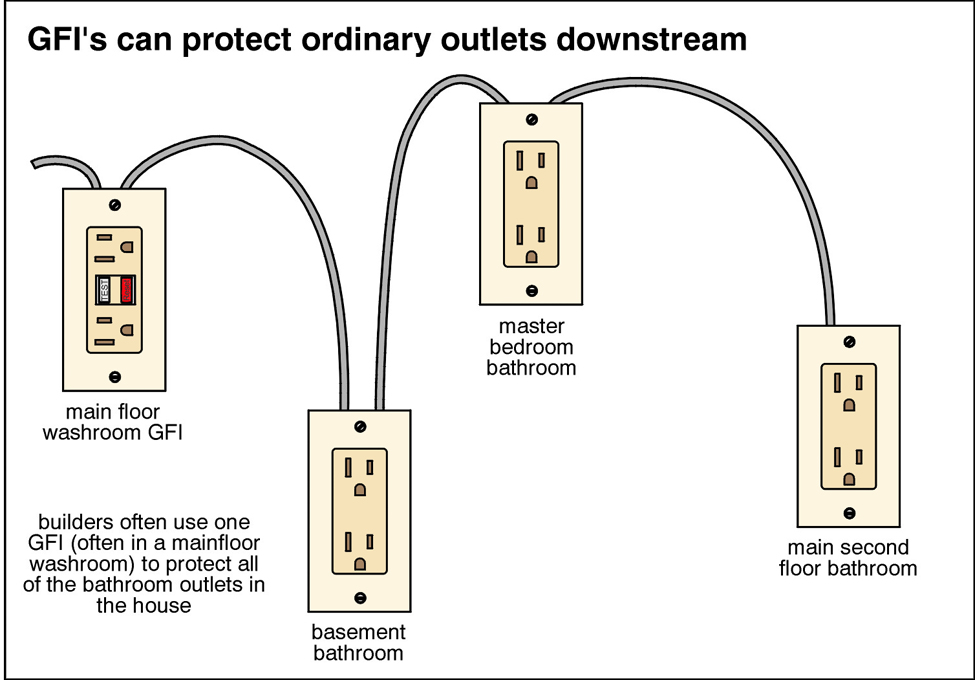
GFCI Distance From Bathroom Sink – Rispa
GFCI outlets protect all outlets on the same circuit, as well as connected tools and appliances. GFCI receptacles are required in bathrooms, garages, crawl spaces, basements, laundry rooms and areas where a water source is present. You need to know if GFCI outlets are required in the bathroom.
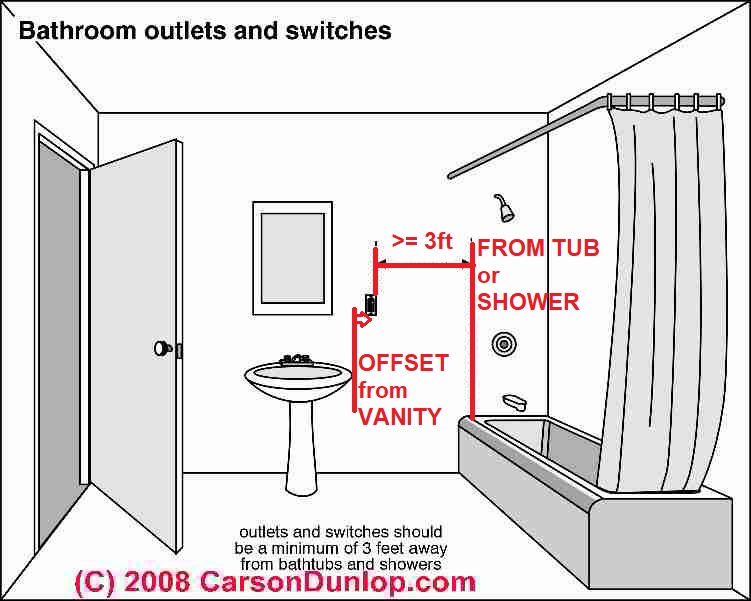
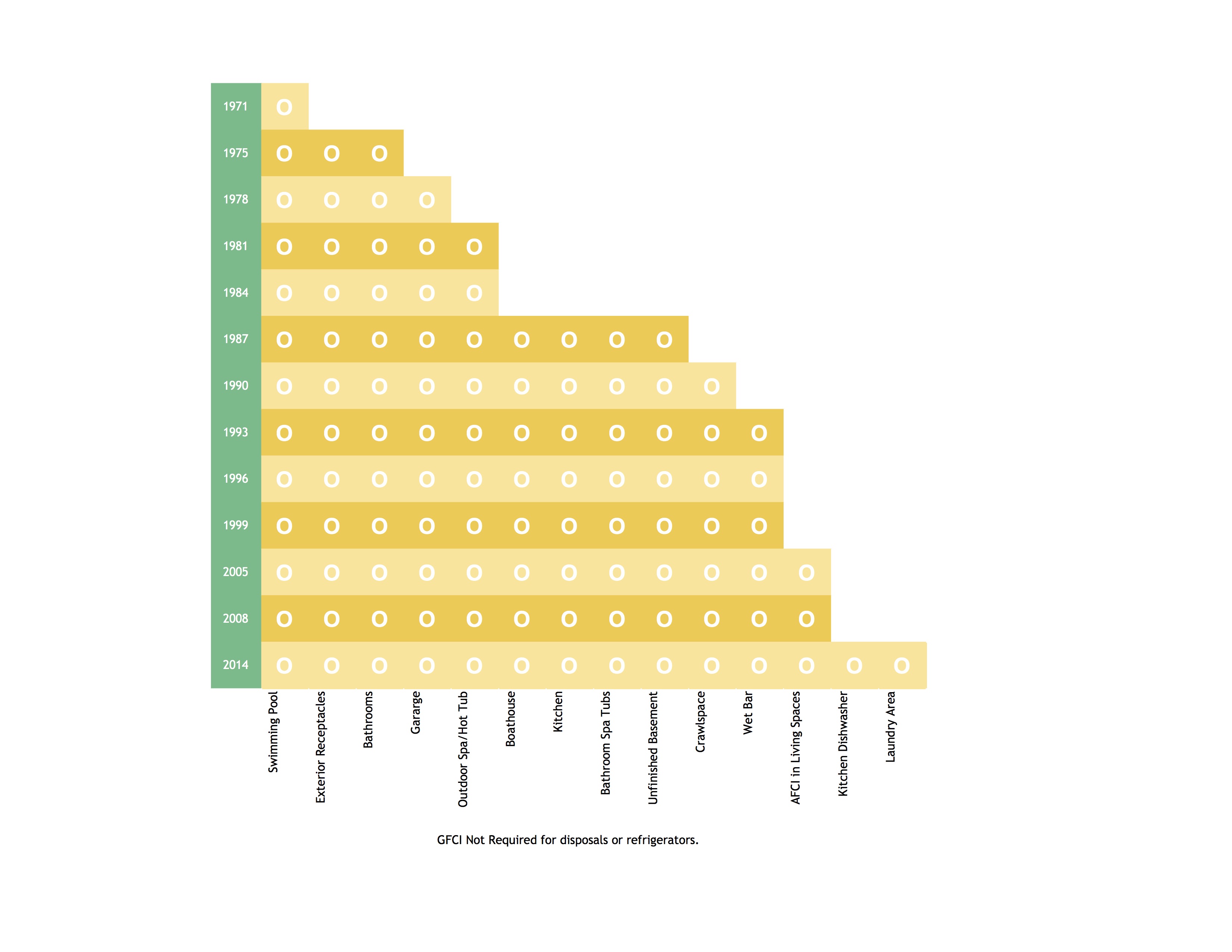
Since 1975, many cities in the United States have adopted electrical codes that require ground fault circuit interrupter (GFCI) outlets in bathrooms. Kitchen, bathroom, and other GFCI requirements generally only apply to new construction and major renovations. Upgrading existing outlets in high-risk areas, however, can dramatically improve the safety of your move and reduce the risk of electrical hazards.
.webp)